
Water Damage Restoration
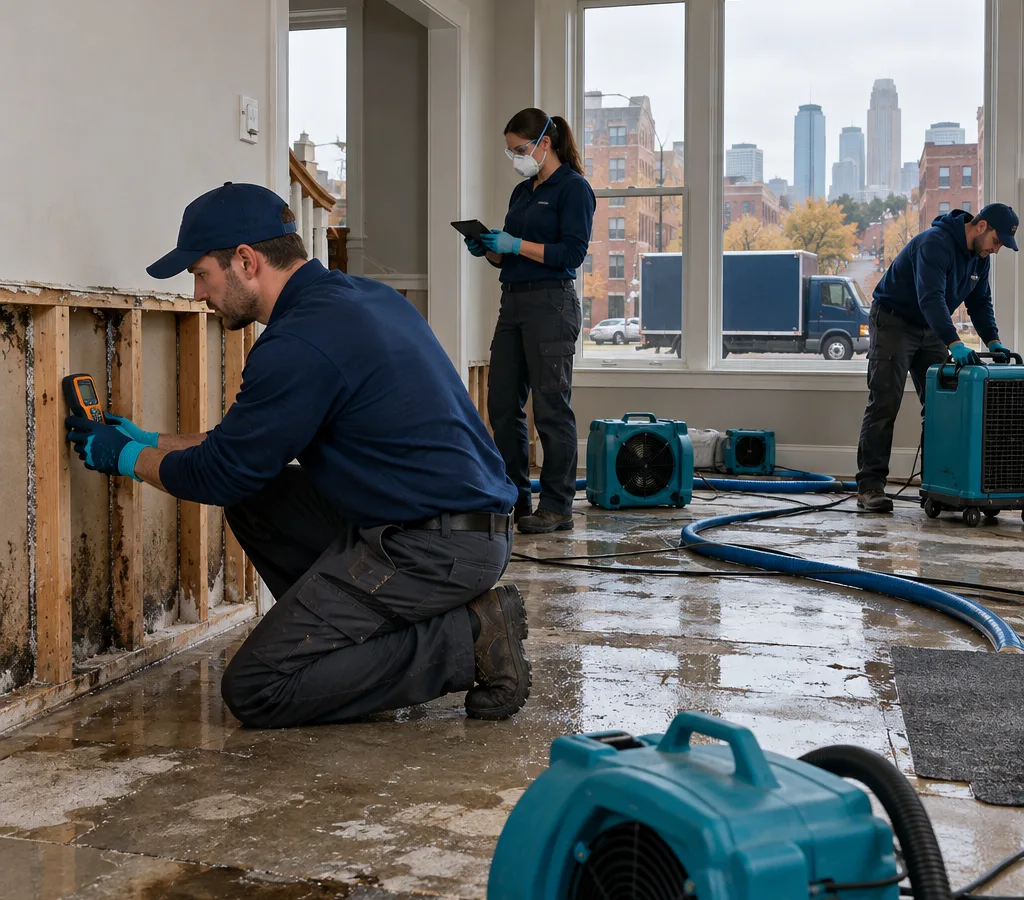
Inspection, water extraction, controlled drying, dehumidification, and removal of materials that cannot be dried in place. Moisture readings help define the affected area and track drying progress.
Serving Minneapolis, Minnesota & surrounding areas
Property restoration · Minneapolis, Minnesota
Clear scopes, careful property cleanup, and practical moisture control for homes and businesses affected by water, mold, fire, smoke, or other damage.
Condition-based restoration
Property damage rarely stays confined to what is visible. Water can move behind baseboards and beneath flooring. Smoke residue can settle inside cabinets and mechanical spaces. Mold growth may indicate a moisture source that must be corrected before damaged materials are replaced. A qualified restoration company in Minneapolis should identify the affected area, document conditions, control further damage, and explain what can be cleaned versus what needs removal.
Mold Abatement Minneapolis approaches each property as a separate job with its own cause, materials, and access challenges. For every project, an experienced mold abatement team in Minneapolis, MN inspects the affected space, establishes practical containment when needed, and builds the work plan around observed conditions rather than assumptions. You receive a clear explanation of the scope before restoration moves forward.
Minneapolis buildings range from older homes with plaster walls and finished basements to apartment buildings and modern commercial spaces. Assemblies such as layered flooring, wall cavities, insulation, and masonry foundations can conceal moisture. Our work accounts for those materials and for the cold winters, snowmelt, summer storms, and indoor humidity changes that affect drying and moisture control in Minnesota.
Property damage services
Inspection, water extraction, controlled drying, dehumidification, and removal of materials that cannot be dried in place. Moisture readings help define the affected area and track drying progress.
Containment, controlled removal of affected porous materials, HEPA filtration, detailed cleaning, and correction of the underlying moisture condition. The work area is kept separate from occupied space when the job requires it.
Assessment and cleaning of soot, smoke residue, and affected contents after fire damage. The cleaning method depends on the residue type and the surface, since an improper method can spread soot or set stains.
Response to moisture intrusion associated with heavy rain, snowmelt, ice-related leaks, and damaged building components. Temporary controls may be needed before drying and permanent repairs begin.
Evaluation of salvageable belongings and building surfaces, followed by cleaning methods suited to the material and contamination. Items that cannot be restored are documented for removal.
Phased containment and cleanup for offices, rental properties, retail spaces, and other occupied buildings. Planning considers access, occupants, equipment, and the need to limit disruption.
Measured before removal
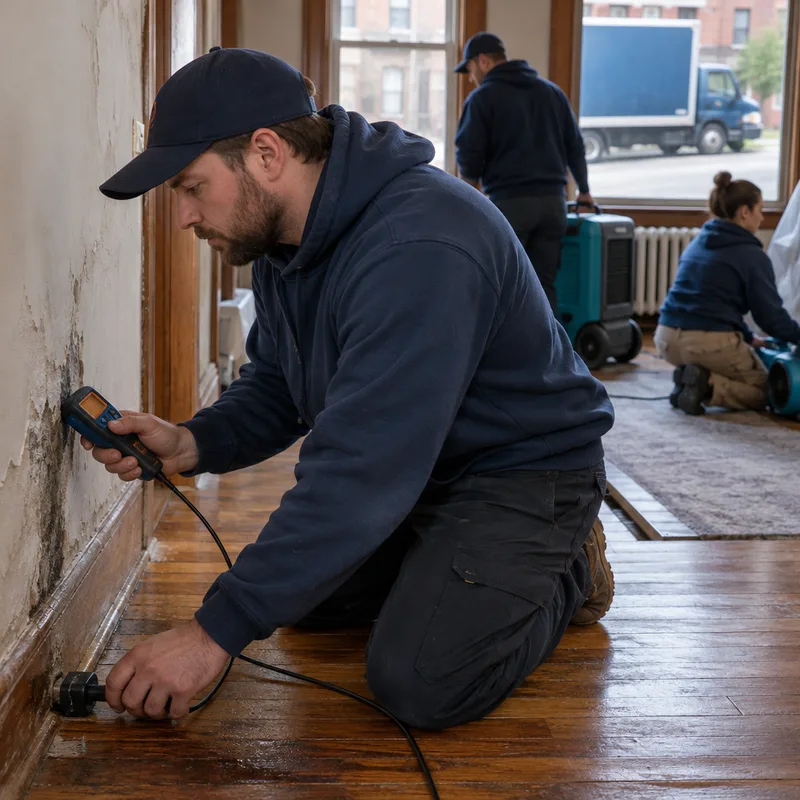
A sound restoration plan starts with the source and the extent of damage. For water-related losses, that means checking the visible area and likely migration paths with noninvasive moisture meters, thermal imaging when useful, and selective investigation where readings indicate hidden moisture. The goal is to remove only what the conditions require while gaining enough access to dry and clean the assembly.
Material matters. Painted drywall may be restorable after a clean-water event if drying begins promptly, while saturated insulation or contaminated porous material often requires removal. Plaster, hardwood, concrete, and dimensional lumber each release moisture differently. Drying equipment must be selected and placed for the actual building assembly, then adjusted using recorded readings.
Lead-based paint and asbestos-containing materials are additional concerns in older buildings. Suspect materials may need testing before disturbance. This is especially relevant when opening walls, removing resilient flooring, or taking down textured finishes. Restoration should never turn a contained loss into avoidable dust or debris throughout the property.
Assessment to repair readiness
Step 1 of 5
We identify immediate hazards, locate the likely source, and assess visible and concealed damage. Active water, unsafe electrical conditions, or openings in the building envelope must be addressed before routine cleanup proceeds.
Step 2 of 5
Photos, moisture readings, affected materials, room dimensions, and recommended actions are recorded. The resulting scope distinguishes emergency controls, removal, cleaning, drying, and repairs.
Step 3 of 5
Where contamination or dust is a concern, barriers and negative air pressure help isolate the work area. Unsalvageable materials are removed using methods suited to the loss and the building.
Step 4 of 5
HEPA vacuuming, surface cleaning, air movement, and dehumidification are used as conditions require. Equipment stays in place until measurements show that materials have reached an appropriate drying target.
Step 5 of 5
The work area receives a final review, remaining materials are checked, and the completed mitigation scope is documented. Rebuilding can begin after the affected assembly is clean, dry, and ready for repair.
Local building context
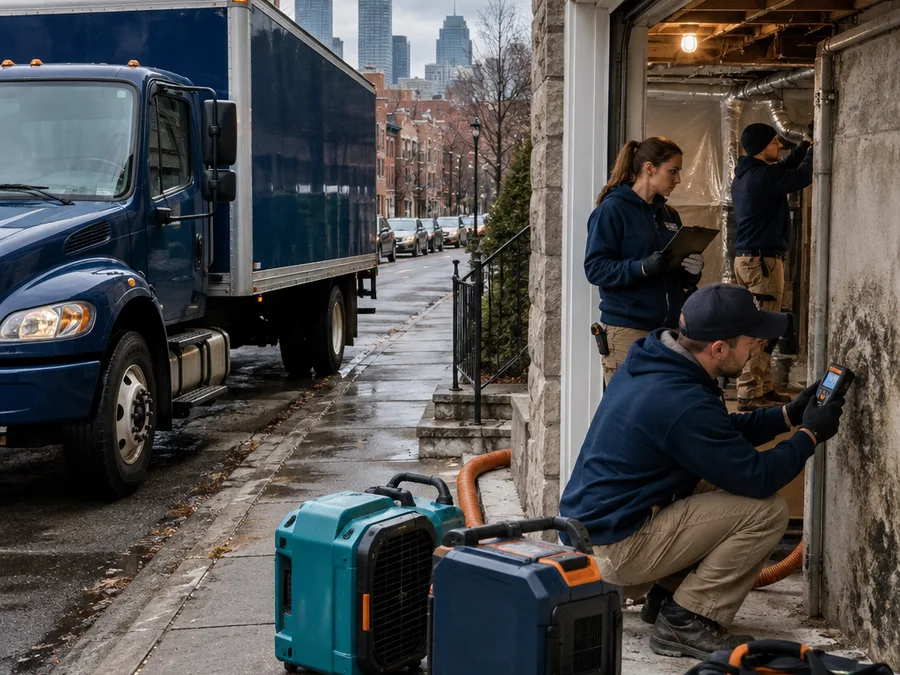
Local building type and season affect how restoration work is planned. In neighborhoods such as Powderhorn and Longfellow, older homes may contain plaster, wood trim, finished lower levels, and multiple generations of flooring. Those layers can slow evaporation or conceal water migration. In North Loop conversions, concrete, masonry, shared walls, and building access can shape containment and equipment placement. Southwest Minneapolis homes often include finished basements where water can travel beneath flooring before appearing at the perimeter.
Winter creates a different set of constraints. Frozen plumbing, ice-related roof leaks, and low outdoor temperatures can complicate ventilation and equipment setup. During spring thaw or heavy rain, foundation seepage and drain backups may introduce water that requires more than ordinary drying. The water category, source, and time in contact with materials determine the protective measures and removal decisions.
For rental and commercial properties, coordination can include owners, tenants, property managers, and insurance representatives. The City of Minneapolis may also have permit or inspection requirements for repair work after mitigation, depending on the scope. Those repair requirements should be separated clearly from emergency stabilization and cleanup.
Compare contractors carefully
Ask how the company determines the boundary of damage, what measurements it records, and how it decides whether a material is cleaned, dried, or removed. A credible contractor should be able to explain the source category, containment plan, equipment strategy, and completion criteria in plain terms. Broad promises without inspection findings are not a substitute for a written scope.
Clarify who performs each phase. Mitigation, environmental testing, reconstruction, and specialty material handling may involve different parties. If independent clearance testing is appropriate, ask whether the assessor is separate from the contractor performing remediation. Independence can reduce conflicts when a formal post-remediation evaluation is needed.
Insurance coverage depends on the cause of loss and the policy. A restoration contractor can document conditions and provide an itemized scope, but the insurer decides coverage. Property owners should report covered losses promptly, take reasonable steps to prevent additional damage, and retain photos, invoices, and equipment records. Do not delay emergency controls while waiting for assumptions about coverage to be confirmed.
Early inspection can limit secondary damage and make the scope easier to define. Describe what happened, when it started, and which areas are affected so the next steps can be planned.
Book Your Free InspectionCommon questions
Plan the next step
Tell Mold Abatement Minneapolis what happened and where you see damage. We will help define the affected area, explain the immediate priorities, and prepare a practical scope for cleanup and restoration.