
Source and Scope Review
The work area is evaluated for visible growth, water staining, material damage, and likely moisture pathways. Moisture meters and visual inspection help determine which surfaces need attention.
Serving Minneapolis, Minnesota & surrounding areas
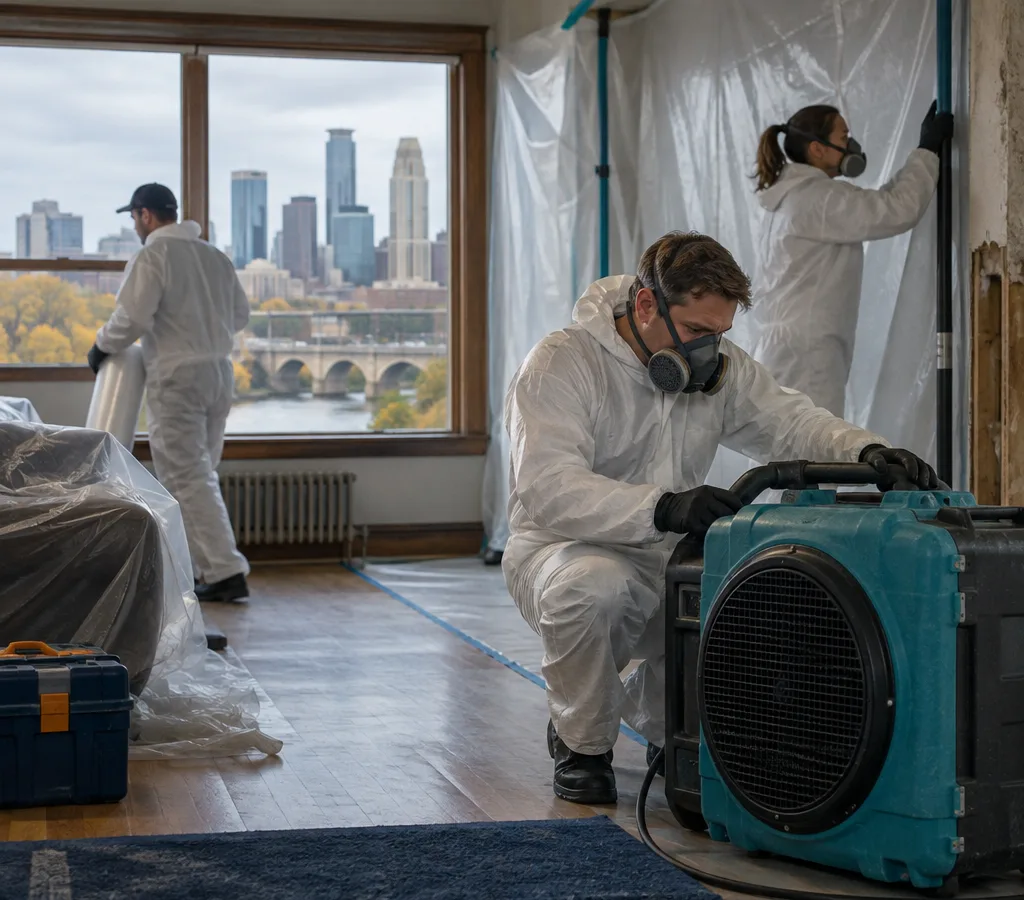
Mold remediation · Minneapolis, Minnesota
A careful plan for inspection, containment, removal, cleaning, and moisture correction, with a clear scope before remediation begins.
Source-focused remediation
Mold remediation in Minneapolis should address both visible growth and the moisture condition that allowed it to develop. Mold Abatement Minneapolis starts by examining the affected materials, looking for signs of water entry or condensation, and defining the boundaries of the work. The resulting scope may include containment, controlled material removal, HEPA-filtered air cleaning, surface cleaning, and recommendations for correcting the moisture source.
We are Minneapolis' mold abatement specialists who approach each property according to its actual conditions rather than applying one standard treatment. A finished basement with damp drywall requires a different plan than an attic affected by condensation or a bathroom with repeated humidity problems. The goal is to remove affected porous materials when they cannot be cleaned, clean salvageable surfaces thoroughly, and limit the spread of particles into occupied areas.
Minneapolis weather adds practical concerns. Cold winters can create condensation where warm indoor air reaches cold roof decking, rim joists, exterior walls, or poorly insulated surfaces. Snowmelt, plumbing failures, roof leaks, and summer humidity can also introduce moisture. Remediation deals with the resulting contamination; lasting control depends on repairing the leak, improving drainage, managing humidity, or correcting insulation and ventilation issues as appropriate.
Household warning signs
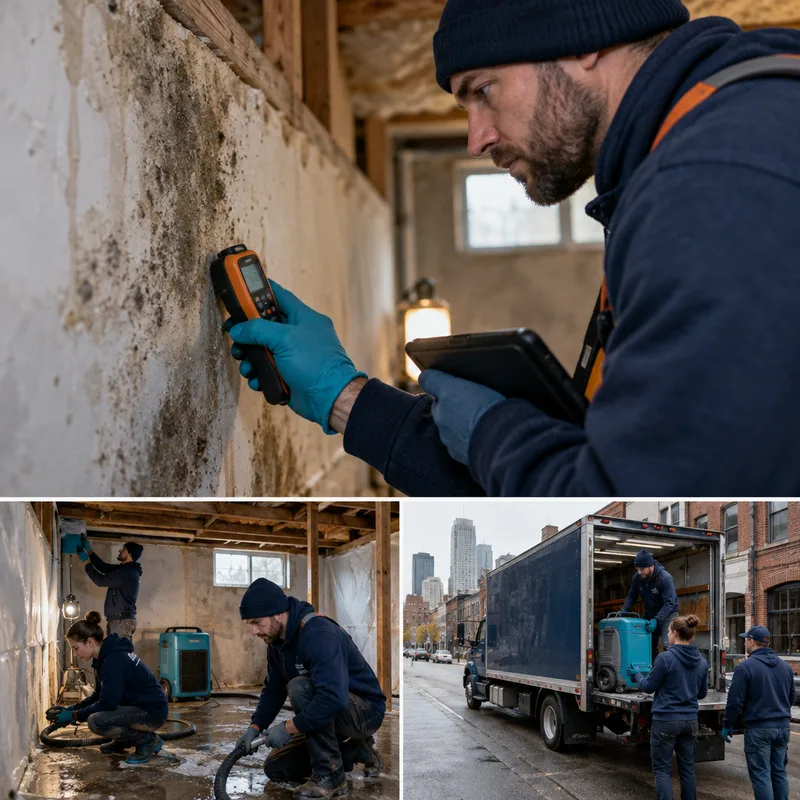
Visible spotting is one reason to investigate, but it is not the only one. A persistent musty odor, recurring discoloration, warped finishes, peeling paint, damp carpet edges, or staining after a leak can indicate hidden moisture and affected materials. Growth may be concealed behind baseboards, beneath flooring, inside wall cavities, around windows, or near attic sheathing.
Avoid disturbing a suspected area before it is assessed. Pulling down drywall, lifting contaminated carpet, or aiming a household fan at visible growth can move particles into adjoining rooms. Painting over the area or applying bleach does not resolve growth inside porous drywall, insulation, wood composites, or carpet backing. Bleach also does not correct the water source.
The inspection should consider where moisture came from, how far it traveled, which materials are affected, and whether occupied rooms can be isolated during the work. When conditions suggest extensive concealed growth, unusual exposure concerns, or a disputed source, independent sampling or assessment may be appropriate. Sampling is not automatically required when visible growth and the moisture source are already clear.
Remediation scope
The work area is evaluated for visible growth, water staining, material damage, and likely moisture pathways. Moisture meters and visual inspection help determine which surfaces need attention.
Polyethylene barriers, sealed openings, and controlled entry points isolate the work area. Negative air pressure may be used to direct air through HEPA filtration instead of toward occupied rooms.
Contaminated porous materials that cannot be reliably cleaned may be removed in a controlled manner, bagged within containment, and carried out without unnecessary disturbance.
HEPA vacuums and air scrubbers capture fine particles. Remaining structural surfaces may be cleaned with methods and products selected for the material and site conditions.
The affected assembly must be dry before reconstruction. Recommendations may address plumbing, roof drainage, grading, ventilation, insulation, or indoor humidity.
The remediated area should be visibly clean, dry, and free of debris. When independent verification is part of the plan, clearance is completed before containment is removed.
Inspection to repair readiness
Step 1 of 6
We discuss the history of the problem, examine accessible materials, take relevant moisture readings, and look for conditions that may extend beyond the visible growth.
Step 2 of 6
You receive an explanation of the affected area, materials likely to be removed or cleaned, containment needs, access requirements, and moisture corrections that should occur.
Step 3 of 6
Contents are moved or protected as needed. Barriers and filtration equipment are installed before affected materials are disturbed.
Step 4 of 6
Unsuitable porous materials are removed under containment. Salvageable structural surfaces are cleaned, and the area is HEPA vacuumed to reduce settled particles.
Step 5 of 6
Moisture conditions are checked, debris is cleared, and the work area receives a visual review. Any separate clearance requirement should be agreed upon before work starts.
Step 6 of 6
Containment is removed at the appropriate point, and the property can move toward rebuilding after the area is dry and the source correction has been addressed.
Local building context

Housing type and construction details affect how mold work is planned. In Longfellow and Powderhorn, many older houses have basements, enclosed wall cavities, and finishes added during later renovations. Water can move behind paneling or drywall before staining becomes visible. In Uptown, multifamily buildings and closely connected units require careful containment so particles are not carried through shared corridors or ventilation paths.
Northeast Minneapolis includes older homes, apartments, and converted spaces where roof details, masonry interfaces, and past remodeling can complicate moisture tracing. In North Loop condominiums and loft-style buildings, access rules, elevators, shared walls, and building management coordination may shape equipment placement and debris removal. These details should be resolved before work begins.
Regardless of neighborhood, the building assembly matters more than the color of the visible growth. A sound plan accounts for drywall, insulation, framing, subflooring, masonry, HVAC openings, and contents within the affected area. It also separates remediation from reconstruction so concealed conditions can be evaluated before new finishes cover the work.
Project budgeting
Mold remediation in Minneapolis typically costs about $1,000 to $6,000 for a defined residential area, while extensive contamination across multiple rooms or building systems may exceed $10,000. Small, accessible areas generally cost less than concealed basement, attic, or wall-cavity work.
Final price depends on affected square footage, material removal, containment level, equipment time, access, disposal, moisture damage, and whether independent testing is requested. Plumbing, roofing, reconstruction, and other source repairs may be separate. The exact cost is confirmed after the affected conditions are inspected and the scope is defined.
Defined before work begins
A useful remediation proposal should identify the work area, planned containment, materials expected to be removed, surfaces expected to be cleaned, filtration equipment, and conditions that may change the scope. It should also clarify whether contents handling, demolition beyond the visible area, source repairs, reconstruction, or independent clearance are included.
Prepare by keeping people and pets away from the planned work zone and by discussing access to electrical service, water, entrances, elevators, and parking. Do not move potentially contaminated belongings through unaffected rooms unless the remediation plan addresses how they will be handled. If a renter, condominium association, property manager, or insurer is involved, confirm who can authorize work and who needs documentation.
Mold Abatement Minneapolis can assess the conditions and explain the practical next steps. A defined scope helps avoid incomplete cleanup, unnecessary demolition, and rebuilding before the structure is dry.
Addressing the moisture source and affected materials promptly can keep a limited problem from reaching additional finishes, contents, or adjoining rooms. Arrange an assessment and get a written remediation plan.
Book Your Free InspectionCommon questions
Plan the next step
Tell Mold Abatement Minneapolis where you found the issue, what moisture event occurred, and whether the area is still wet. We will help define the next step for inspection and remediation.