
Inspection and Moisture Mapping
The work area is examined for visible growth, water staining, material damage, and elevated moisture. Moisture meters and, when useful, thermal imaging can help identify areas that deserve closer investigation.
Serving Minneapolis, Minnesota & surrounding areas
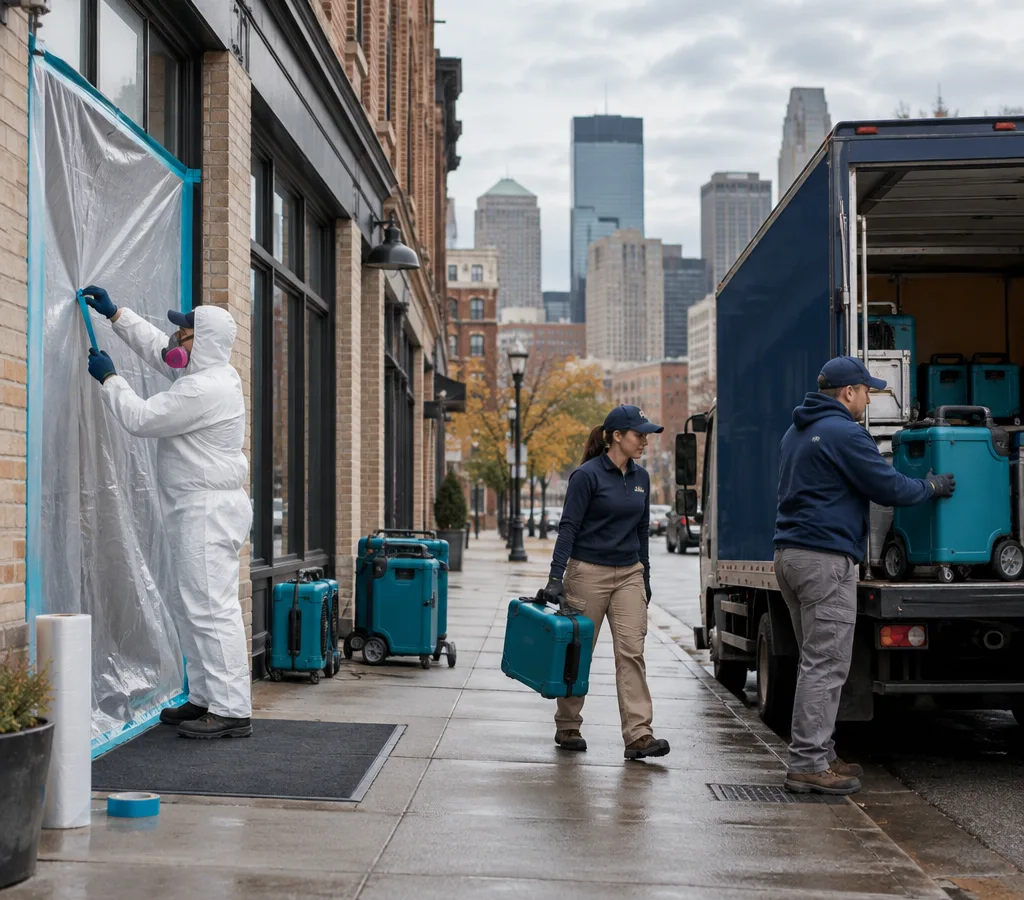
Mold removal · Minneapolis, Minnesota
Get a clear assessment, controlled cleanup, and practical guidance for correcting the moisture problem behind the growth.
Source-first cleanup
Effective mold removal in Minneapolis, MN, starts by finding the moisture source and defining the affected materials. Removing visible growth without correcting a roof leak, plumbing failure, condensation issue, or damp foundation condition leaves the underlying problem unresolved.
Mold Abatement Minneapolis approaches each property according to its conditions. As a professional mold abatement company in Minneapolis, MN, we inspect the suspected area, explain what appears affected, and develop a cleanup scope based on moisture, material type, access, and the extent of growth. The goal is controlled removal rather than disturbing contaminated material and spreading particles through the building.
Minneapolis properties face sharp seasonal changes. Snow and ice can expose roof or flashing defects, spring runoff can reveal foundation seepage, and summer humidity can worsen condensation in basements or poorly ventilated rooms. During winter, cold surfaces around exterior walls, windows, and rim joists may collect moisture when warm indoor air reaches them. A sound plan accounts for these conditions instead of treating a stain as an isolated cosmetic issue.
Household warning signs
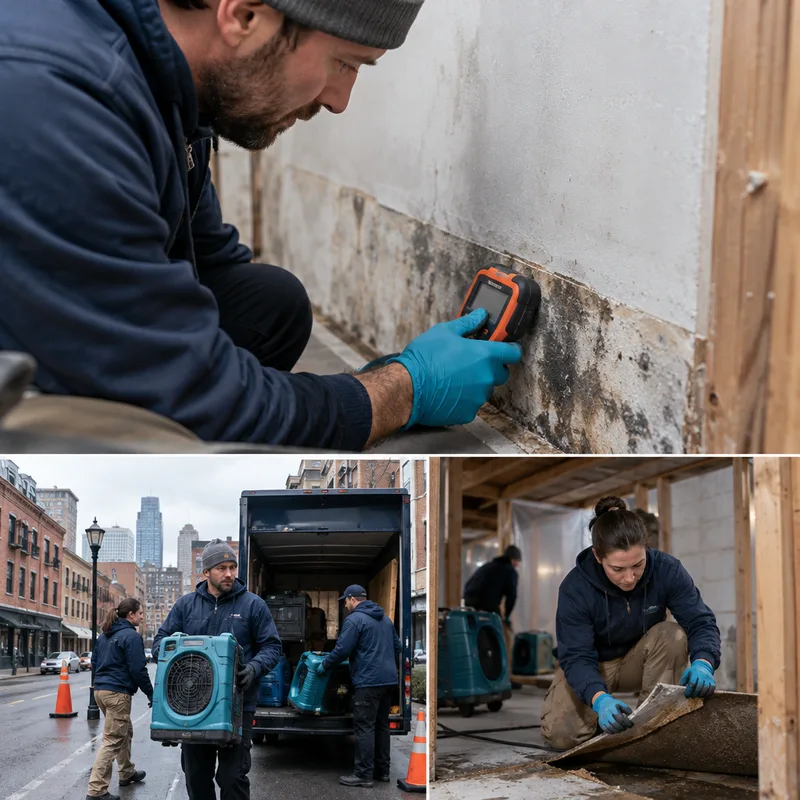
Visible spotting is one reason to investigate, but it is not the only one. A persistent musty odor, recurring discoloration, warped drywall, peeling coatings, damp insulation, or growth returning after cleaning can point to hidden moisture. Problems may develop behind baseboards, beneath flooring, inside wall cavities, around plumbing, or near foundation walls.
Housing conditions vary across the city. Older homes in Phillips and Powderhorn often have finished spaces added long after the original construction, which can make concealed cavities and older plaster assemblies harder to inspect. In Northeast Minneapolis, properties may combine older foundations with later renovations. Homes around Longfellow can include basements where grading, downspout discharge, or past seepage deserves attention. These traits do not prove that mold is present. They help determine where a careful inspection should focus.
After a water event, porous materials such as drywall, insulation, ceiling tile, and carpet pad may need removal if they cannot be cleaned and dried adequately. Nonporous surfaces can often be cleaned using suitable methods. Semi-porous wood requires evaluation based on condition, depth of growth, and whether the moisture source has been stopped.
Removal scope
The work area is examined for visible growth, water staining, material damage, and elevated moisture. Moisture meters and, when useful, thermal imaging can help identify areas that deserve closer investigation.
Polyethylene barriers and controlled access can isolate the work area. Negative air pressure may be used to keep airborne particles from moving into adjacent occupied rooms.
Unsuitable porous materials are carefully removed and bagged within the controlled area. The scope should distinguish removal from cleaning so property owners know what will remain.
HEPA-filtered equipment is used to capture fine particles. Work commonly includes HEPA vacuuming and detailed cleaning of remaining surfaces rather than relying on paint or fragrance to conceal conditions.
The area must be dry before reconstruction. Recommendations may address leaks, drainage, ventilation, insulation gaps, or indoor humidity, depending on what caused the moisture.
A final visual review checks whether the defined materials were removed and the work area was cleaned. Independent post-remediation verification may be appropriate for larger or sensitive projects.
Inspection to final review
Step 1 of 5
We start with what you have observed and when it began. Past leaks, flooding, plumbing repairs, recurring odors, and previous cleanup attempts can narrow the search for the source.
Step 2 of 5
Affected rooms and nearby materials are assessed. When hidden growth is suspected, limited investigation may be recommended before a final removal scope is set.
Step 3 of 5
Containment is installed as the project requires. HVAC openings in the work zone may be protected, and negative-air equipment can help prevent particles from escaping during removal.
Step 4 of 5
Materials included in the scope are removed or cleaned using methods suited to their porosity and condition. Debris is contained before it leaves the work area.
Step 5 of 5
Remaining materials are dried and cleaned, then visually reviewed. We discuss any moisture corrections or reconstruction steps that still need attention.
Occupied-property protection
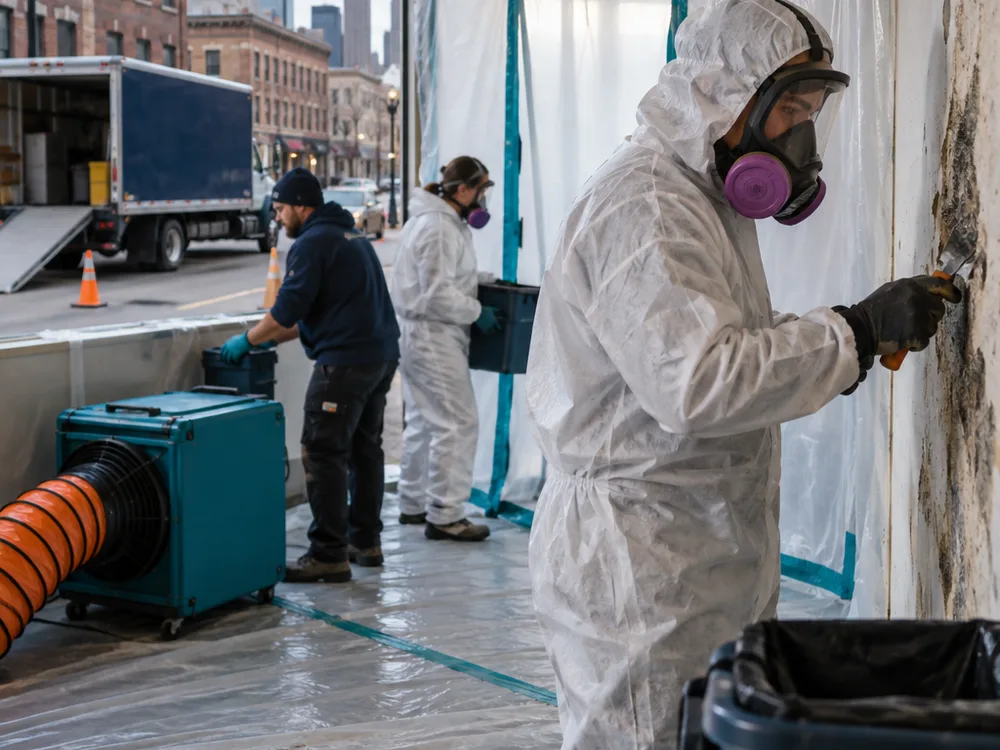
Mold removal can release settled particles when drywall is cut, insulation is pulled, or damaged materials are carried through a building. Containment limits that movement. The appropriate setup depends on the affected area, the work methods, and how the property is occupied.
A typical controlled area may use plastic sheeting, sealed seams, a designated entry, and a HEPA-filtered negative-air machine exhausting according to site conditions. Workers use personal protective equipment suited to the task. Removed materials are bagged or wrapped before transport through clean portions of the property.
Bleach is not a complete answer for every mold problem. It does not correct moisture, and surface treatment cannot restore porous material that is deteriorated or contaminated through its thickness. Likewise, encapsulating paint should not be used as a substitute for removing growth and drying the assembly. Coatings may have a role after proper preparation, but the substrate must first be suitable for coating.
Project budgeting
Professional mold removal in Minneapolis typically costs about $750 to $6,000, while extensive contamination, difficult access, or removal across several rooms can cost more. A small, accessible area is generally less expensive than work inside finished walls, attics, crawl spaces, or mechanical cavities.
Final price depends on affected square footage, containment needs, material removal, access, drying, equipment time, and whether independent testing is requested. Repairs and reconstruction may be separate from remediation. The exact cost is confirmed after inspection and a written scope.
Defined before demolition
A useful proposal identifies the affected areas, containment plan, materials expected to be removed, cleaning methods, and exclusions. It should also state whether testing, moisture repairs, contents handling, and reconstruction are included. This makes estimates easier to compare and reduces confusion once walls or flooring are opened.
Sampling is not automatically necessary when visible growth is present and the cleanup scope is clear. It may be useful when the source is uncertain, documentation is needed, occupants have specific concerns, or independent verification is requested. Laboratory results should support a decision, not replace the physical inspection and moisture investigation.
Minnesota property owners should also consider whether the assessor, cleanup contractor, and post-work verifier need separate roles for their situation. An independent environmental consultant can develop a protocol or perform clearance testing when third-party documentation is warranted. Mold Abatement Minneapolis can discuss the practical sequence so you know what must happen before removal, what happens during cleanup, and what remains afterward.
Addressing the moisture source early can keep the affected scope from expanding. Arrange an inspection to get a written plan based on the actual materials and conditions in your property.
Book Your Free InspectionCommon questions
Plan the next step
Tell us where you found the problem, what moisture event may have caused it, and whether the area has been opened. We will help you determine the next practical step for inspection and cleanup.