
Mold Removal Minneapolis
Mold grown into drywall or carpet won't wipe off. Get the ruined material taken out and the framing behind it cleaned and dried.
Call (612) 500-4105- Ruined material out, not painted over
- Rest of the house kept clean
- Local contractors
Some mold cleans off. Mold that has grown into drywall, carpet pad, insulation or ceiling tile does not, and that material has to come out. Homeowners in Minneapolis, Minnesota usually find it after a leak, a wet basement or a winter of condensation, and the tear-out is the part of the job that has to be done without spreading spores through the rest of the house.
Mold Removal Service: What Gets Taken Out
A mold removal service starts by sorting what can be cleaned from what cannot. Porous material that stayed wet is the usual casualty:
- Drywall and paneling, cut back past the visible growth
- Carpet pad, and often the carpet over it
- Fiberglass and cellulose insulation
- Ceiling tile
- Swollen particleboard, such as cabinet bases and shelving
Each piece is bagged inside the work area and carried out sealed, so the dust does not ride through the hallway on the way to the door.
Drywall, Carpet, Framing: What Stays
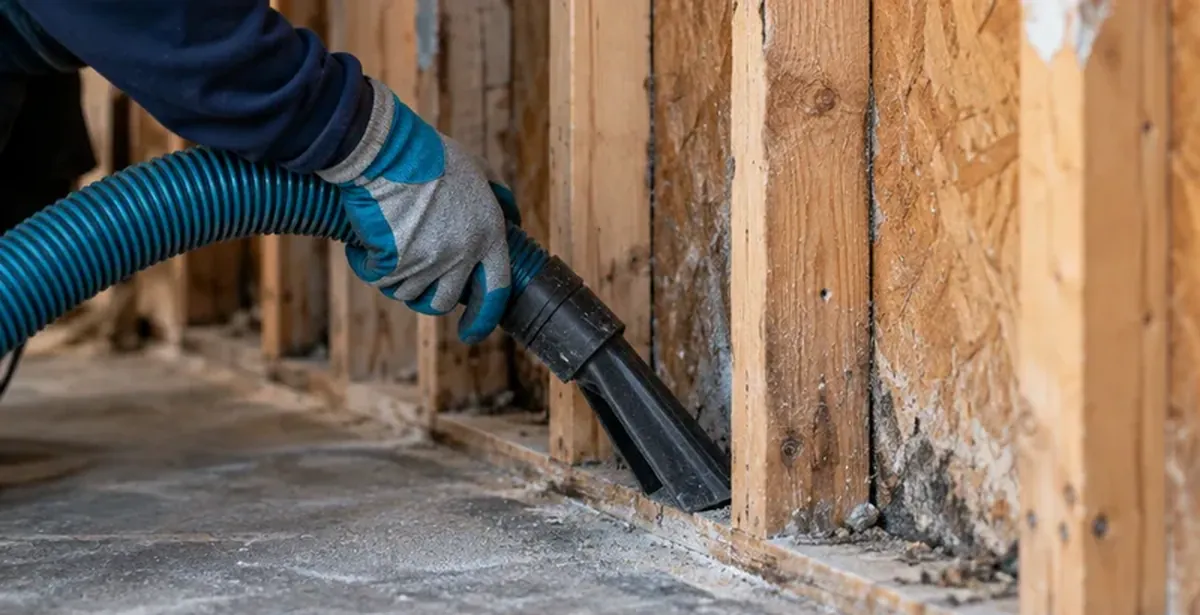
Solid wood, concrete, metal and tile can usually be saved. Studs and joists are HEPA-vacuumed, then scrubbed, wire-brushed or sanded until the staining is gone, and dried. The EPA advises against painting or caulking over a moldy surface, because paint applied over growth is likely to peel, so cleaning comes first every time.
Mold Treatment: After the Tear-Out
Mold treatment covers the surfaces left behind once the ruined material is gone. They are vacuumed again, wiped down and dried with fans and dehumidifiers. Some contractors also apply an antimicrobial or a sealer to cleaned framing; ask what is being used and why. No coating replaces drying, and none makes up for a leak that is still running.
Keeping Spores Out of the Rest of the House
Cutting into a moldy wall releases spores, so the room is closed off with plastic sheeting and a filtered fan pulls air out of the work area. Supply and return vents in the room are covered. The EPA also advises not running the furnace or air conditioner if the system itself may be contaminated, since it can move spores through every duct.
Soft drywall or stained carpet? Have it checked before it spreads.
Call (612) 500-4105Who Puts the Wall Back?
Tear-out leaves open studs, and closing them up is construction work. Minnesota requires a residential building contractor or remodeler license for a company that contracts with a homeowner for work in more than one special skill, so ask whether the contractor rebuilds under that license or hands the repair to another company. For the steps before and after the tear-out, see the Mold Abatement Minneapolis overview.
What Does a Typical Job Run?
A medium job covering 10 to 100 square feet typically costs $1,300 to $4,000. A small surface job under 10 square feet typically costs $500 to $1,500, and a large or structural job over 100 square feet typically costs $5,000 or more. These are typical ranges for Minneapolis, MN, not quotes, and rebuilding walls and floors is usually priced separately.
Asked Before Work Starts
- How much does mold removal cost?
- A medium job covering 10 to 100 square feet typically costs $1,300 to $4,000. A small surface job under 10 square feet typically costs $500 to $1,500, and a large or structural job over 100 square feet typically costs $5,000 or more.
- Can moldy drywall be cleaned instead of removed?
- Rarely. Drywall is porous, so growth runs into the paper and gypsum, and the usual fix is to cut the section out past the visible edge.
- Can a homeowner do mold removal without a contractor?
- Often, for a small patch. The EPA says an area under about 10 square feet can usually be handled by the homeowner; larger areas and growth inside walls are contractor jobs.
- Does mold removal include rebuilding the wall?
- Not always. Some contractors remove and rebuild, and others stop at clean, dry framing, so ask what the quote covers.
- Is painting over mold enough?
- No. The EPA says to clean up the mold and dry the surface before painting, because paint applied over a moldy surface is likely to peel.
- Is mildew and mold removal the same job?
- Mildew is surface mold, often on tile, caulk and painted walls. Surface mildew usually scrubs off; growth that has moved into drywall or wood needs removal.
See It Spreading? Get It Looked At
Tell the contractor where the growth is and how long the area has been wet.
Call (612) 500-4105